
Conflict Resolution & The Pursuer-Distancer Cycle: Conflict Resolution Counseling That Actually Works
If you’ve found yourself in situations where you and your partner, spouse or family member are continually calling each other out in the same argument, you most certainly don’t need the additional communication tip. Conflict resolution counseling is needed to uncover what is really underneath the surface, and causing the fight, and not the apparent subject matter you are having an argument about.
The essence of conflict resolution counseling is a signature framework the Pursuer-Distancer Cycle in Go Beyond Talk Therapy. It is not a standard conflict resolution therapy method that is found in some books. It is a refined methodology that has been lived over 45 years of working with couples, families and single individuals year after year with the same dynamic: one partner wanting to feel connected to their partner and the other partner wanting to stay away from the partner and feel isolated in the relationship.
If you had looked for a “conflict resolution therapist” or a “conflict resolution counselor near me” and found that traditional talk therapies weren’t working, this page will give you some information about this and more, and will tell you what actually does work.
What Is Conflict Resolution Counseling?
Conflict resolution counseling is a type of counseling geared specifically toward helping individuals, couples, and families recognise destructive conflict patterns, reasons for these patterns based on the reactions of their emotions, and techniques for changing the patterns for more positive ones. Typical non-violent conflict resolution therapy practices are based on communication scripts “I feel” statements, as listeners, taking turns talking.
Those tools are not a bad thing, but often they don’t work in actual relationships when it is viewed as a pattern problem with emotions rather than a communication problem. Conflict resolution strategies need to take a look at why the same argument just keeps happening again and again rather than the way it’s expressed.
Well, that’s where the Pursuer-Distancer cycle comes into play.

The Pursuer-Distancer Cycle: Why Most Conflict Resolution Strategies Fail
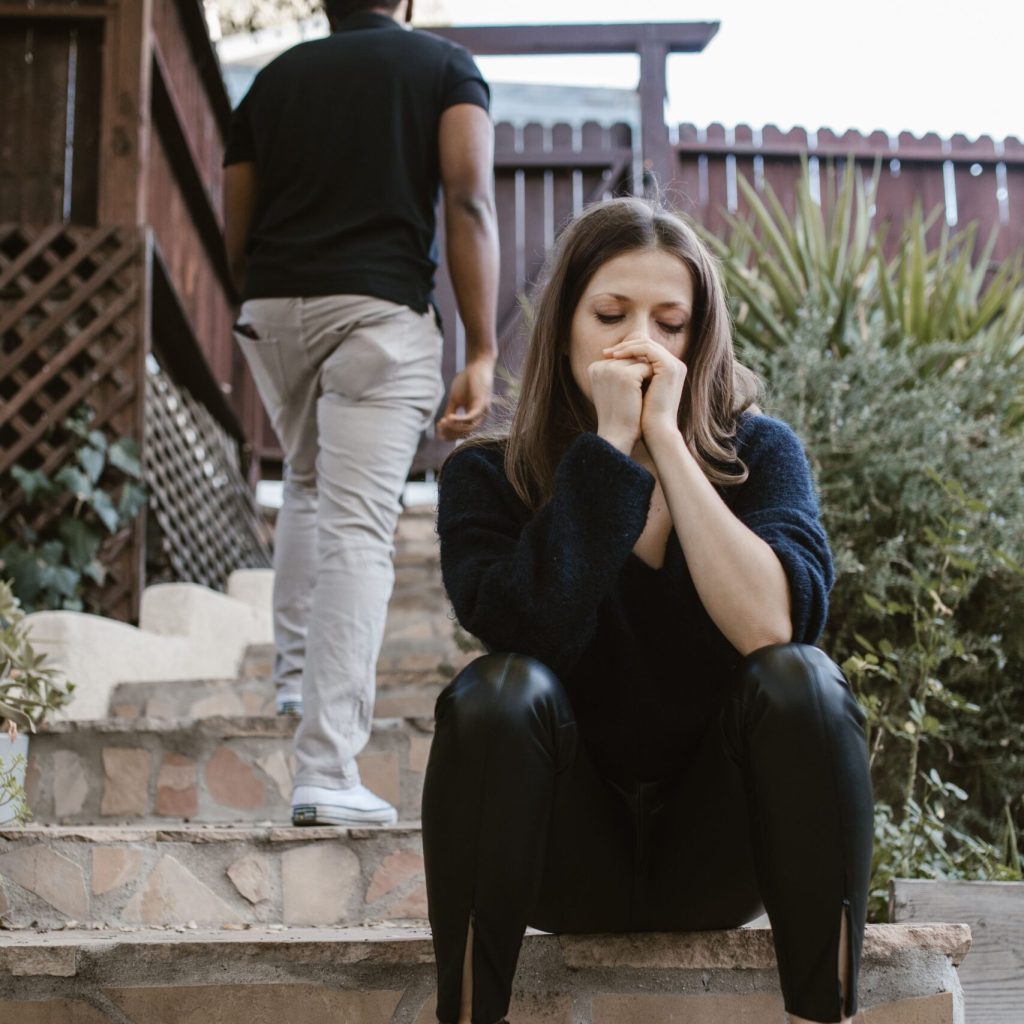
One thing emerges time and time again in nearly every long-term relationship that is plagued by conflict: the pursuer-distancer pattern. There is one person who wants a conversation to get things sorted, moves in that direction, wants to learn more from the conflict to settle it now. The other one walks off, requires space, silence or time to get involved.
This is the pursuer-distancer dynamic in which people get caught, it’s one of the most frequent and least understood – and ultimately, most damaging – patterns of stalled conflict, disconnectedness and separation or divorce.
How to Recognize the Pursuer Distancer Pattern in Relationships
Most conversations about the relationship are started by one partner and not the other
When arguments come to an end, one of the parties wants to “stop talking” and the other turns off the computer or leaves the room
As one pushes towards connect, the other pulls back – and the more the other pulls back, the more the first pushes towards connect
Both players are feeling unseen, the pursuer is feeling unnoticed and the distancer is feeling suffocated
That conflict (time, affection, money, parenting) crops up in different ways every few weeks.
If you’re in this position, you’re not at fault with trying to communicate. This is a vicious circle you’re stuck in, and this is what a pursuer Distancer Counselling process aims to break.
How to Stop Being the Pursuer in a Relationship (Without Giving Up)
One frequent complaint that clients have when they come to conflict resolution therapy is that they don’t want to become the pursuer in a relationship by simply shutting down, or tuning out emotionally. That’s not an equation of the loss of caring, the loss of needing to be connected, but rather it is an equation of the way in which care and or the need for connection are expressed so as to not create any more distance.
Also, the relationship distance is not a rejection of love, but a rejection of the hurtful or uncomfortable relationship pattern that has been carried out in the past. Distancers may need to learn how they need to approach the need for space while communicating it as a need, and treatment can assist them with that.
Learning this cycle means that both people need to shift half of the cycle at the same time – this is why a trained therapist that can facilitate real-time, session-by-session identification of the cycle is best suited to accomplish this task.
How Conflict Resolution Therapy Works With Phil DeLuca
Phil DeLuca, LCSW, has been working with families, couples, and individuals for over 45 years that are stuck in destructive conflict patterns. This practice applies a different methodology to a separate approach from the traditional talk therapy that often becomes a continuance of “talking it out” that can perpetuate the pursuer-distancer dynamic.
Sessions focus on:
- Recognizing the role they are likely to fall into (pursuer or distancer) and why
- Getting slower to a reactive conflict in order to observe the pattern, rather than to identify with it and participate in it
- To experientially show emotional regulation in conflict, keeping both sides from getting dyads hitched or shut down mid-conversation
- Developing relationship communication counseling skills that will stand up outside the therapy office, in real-world relationships
- Focusing on the root causes – often some of the early attachment patterns – of pursuing or distancing behaviour that can occur automatically
This technique’s approach goes hand in hand with a technique developed within the practice called the UnTalk™ Therapy that is in essence about making couples reverse the tendency to perpetuate conflict through over-talking behavior and focus on reconnecting.

Who Benefits From Conflict Resolution Counseling
This work is not only for couples that are on the verge of divorce. Conflict resolution counseling is supportive of:

Conflict resolution therapy for couples
If there are recurring conflict patterns or disconnection between you and your partner or a pursue-withdraw dynamic that is hurting the relationship. This is where couples counselling helps couples to improve communication and decrease conflict the most directly.

Marriage counseling conflict resolution
Is for couples who fall on the same pipe when something has to do with love and intimacy, when it has to deal with parenting, or when it has got to do with money or time.

Family conflict resolution counseling
When parents and adult children, siblings or blended families continue to subject themselves to old patterns that involve seeking acceptance or withdrawal. The following work pairs well with family therapy services for families experiencing more significant relational problems.

Relationship conflict resolution for dating couples
To teach dating couples how to resolve conflict respectfully and effectively, before the pursuer and distancer dynamics become a habit.
Core Conflict Resolution Skills You’ll Build in Therapy
Healthy conflict resolution is healthy conflict resolution – it is definitely not a lack of conflict, it is finding a secure way through it. During the sessions, clients generally create:
- Early detection of pursuer-distancer behaviour to avert the situation before it goes beyond a good will
- Emotional regulation in conflict – conversations don’t get flooded or shut down
- The understanding and ability to communicate without defense through a relationship
- Rebuild strategies after an argument, rather than de-escalation while an argument is happening
- Recognizing a partner’s withdrawal or pursuit behaviours and not assuming they are a weakness
- Working through conflict with partner without having to “win” the disagreement
These conflict resolution strategies are practiced in session and continued outside of sessions to maintain in the real-life situation of the conflict occurring outside the therapy room.
Signs You Need a Conflict Resolution Therapist
If you notice any of these, it’s time to contact a conflict resolution counselor:
- The same argument occurs between you and your partner time and time again, but on different issues
- One of you agrees to be turned down, snubs or becomes distracted when disagreements arise
- The other feels that he or she is not getting heard to and may be anxious about or feel like chasing for the attention
- Conflict is becoming more of a burden than occasional
- Previous couples counseling learned to get their thoughts and feelings out and nothing really changed
- It is because you feel this needs outside assistance and are looking for a conflict resolution counselor near you.
If any of this sounds familiar, a conflict resolution therapist, who is particularly skilled at the pursuer-distancer pattern, will mean the difference between business as usual and a different kind of results.

When Conflict Runs Deep: The Conflict Intensive Program
If couples and families can’t resolve high intensity conflict in their weekly sessions, or if their conflict has been long-standing and reached a level that calls for intensive and in-depth attention, consider the Conflict Intensive program, a focused and intensive program format that can interrupt certain pursuer-distancer patterns sooner.
Ready to Break the Cycle?
It’s not as though it’s going to be the same discussion in a different garment. If you are either the pursuer or the person putting the distance between you, or you’ve just gotten tired of the cycle, conflict resolution counseling could help you and your relationship navigate the way out. When you’re ready to take steps to repair trust and connection from scratch, our step-by-step approach to rebuilding trust and connection offers helpful guidance before your first session.
Book your conflict resolution counseling appointment today or call +1 (704) 890-8112 to schedule a free 15-minute consultation.
Frequently Asked Questions Conflict Resolution & The Pursuer-Distancer Cycle
Q. What is conflict resolution counseling?
Conflict resolution counseling is therapy that concentrates on uncovering patterns of destructive conflict – such as the pursuer and distancer pattern – and substituting them with healthier communication and emotional regulation skills or strategies, not just on teaching scripted methods of conflict resolution.
Q. How is this different from regular marriage counseling?
This marriage counseling conflict resolution process works specifically on the pursuer or distance dynamic that lies below the surface of the conflict – and not just on the actual “issues” of chores, money, parenting decisions, etc.
Q. What is the pursuer-distancer pattern?
The pursuer-distancer dynamic in relationships happens when one individual strives for closeness and communication with another person whilst they push back and demand space. As one pursues, the other distances, and the more the one pursues the more the other distances; and this continual process is repeated over and over again.
Q. How do I stop being the pursuer in a relationship?
Understanding what is going on with the need to seek reassurance and moving towards non-destructive, regulated, secure communication is a way of changing the role of the pursuer in a relationship.
Q: Can a distancer in relationships actually want closeness?
Yes. Most distancers desire connection as well as their person – yet react differently to vulnerability, and sometimes it may have to do with previous life experiences where closeness appeared dangerous.
Q: Do you offer family conflict resolution counseling, not just couples work?
Yes. Family conflict resolution counselling focuses on parent or child or two siblings or various parent and child constellation conflicts as well as blended family dynamics within a relationship, rather than in romantic relationships.
Q: Is this conflict resolution therapist available for online sessions?
Conflict resolution therapy can be conducted over the Internet and there are sessions that can be done face to face for individuals, couples and families.
Q: How long does it take to break the pursuer-distancer cycle?
The time frames are different for each couple, but if both partners are committed, many people will see change in the pattern within a few sessions. The Conflict Intensive format might be suitable for more entrenched cycles.
Q: How do I find a conflict resolution counselor near me?
For those in or near Midland, Monroe, Concord, Indian Trail or Mint Hill, NC, Phil DeLuca provides in office and online conflict resolution counselling – contact him via the contact form and set up an appointment.