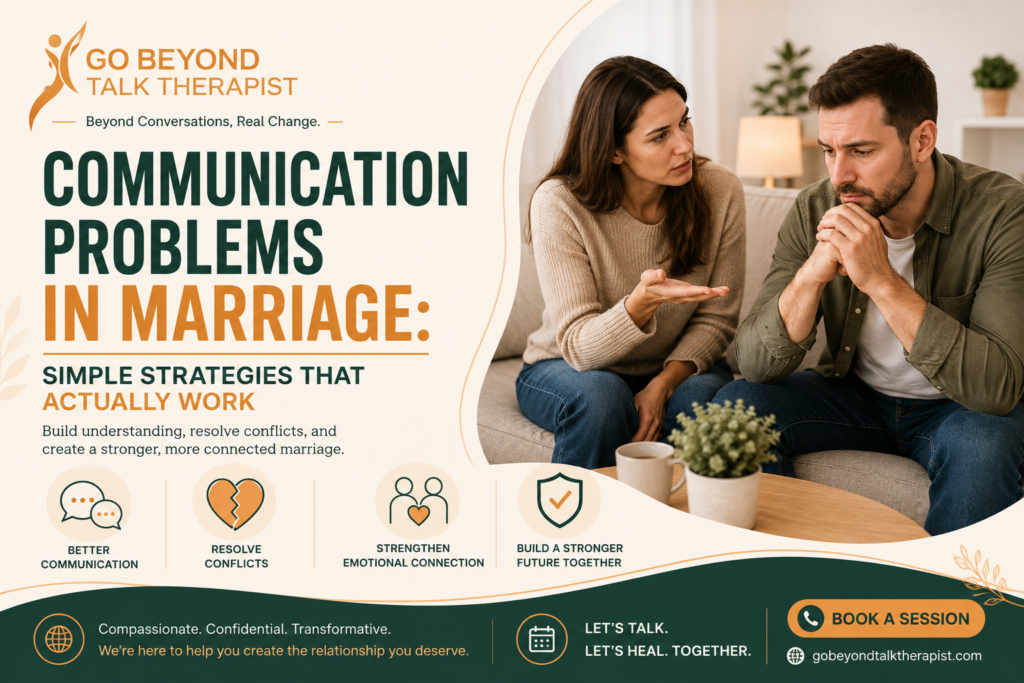
Almost every couple that walks into a therapy room says some version of the same thing: “We just can’t communicate anymore.” Communication in relationships is often blamed for everything from constant arguments to slow emotional drift, and in many cases, it really is the root issue. The good news is that communication is a skill, not a fixed trait — which means it can be learned, practiced, and improved with the right strategies and, when needed, the right professional support.
Why Communication Breaks Down in Marriage
Communication problems rarely start with one big blowup. More often, they build gradually through small misunderstandings, unspoken expectations, and conversations that turn defensive before either partner even realizes what happened. Over time, couples stop reaching for each other altogether, assuming the conversation isn’t worth the conflict it might cause.
The Difference Between Talking and Truly Connecting
Talking and connecting aren’t the same thing. Couples can exchange plenty of words about schedules and errands while still feeling emotionally distant. Real connection happens when both partners feel heard, understood, and safe enough to share what’s actually going on beneath the surface — which is where most Best communication in relationships tends to break down.
Strategy 1: Use “I” Statements Instead of Blame
Statements that start with “you always” or “you never” put the other person on the defensive before the conversation even begins. Shifting to “I” statements — such as “I feel unheard when…” — keeps the focus on your own experience rather than accusing your partner, making it easier for them to actually listen.
Strategy 2: Practice Active Listening
Active listening means fully focusing on your partner’s words instead of planning your response while they’re still talking. Reflecting back what you heard — “So what you’re saying is…” — shows your partner they’ve actually been understood, which alone can defuse a surprising amount of tension.
Strategy 3: Schedule Regular Check-Ins
Many couples only talk about important issues once tension has already built up. Scheduling a short, regular check-in — even fifteen minutes a week — gives both partners a consistent space to raise concerns before they turn into bigger conflicts, and helps normalize open communication as a habit rather than a crisis response.
Strategy 4: Learn Each Other’s Communication Style
Some people process out loud; others need time alone to think before they can talk. Neither style is wrong, but conflict often arises when partners expect each other to communicate the same way they do. Learning and respecting these differences is one of the simplest ways to reduce unnecessary friction.
How Emotionally Focused Therapy Improves Communication
Emotionally focused therapy looks beneath surface arguments to the attachment needs driving them — the need to feel valued, secure, and emotionally safe with your partner. By addressing these deeper needs directly, couples often find that the surface-level communication problems become far easier to resolve on their own.
Strategy 5: Address Conflict Early, Not After It Builds Up
Letting frustration pile up before addressing it usually means the eventual conversation carries far more weight — and far more anger — than the original issue deserved. Addressing concerns while they’re still small keeps conversations calmer and more productive.
Strategy 6: Know When to Bring in a Couples Therapist
Some communication patterns are difficult to change without outside support, especially when both partners are too emotionally activated to hear each other clearly. A Best couples therapist near you can help interrupt unhelpful patterns in real time and teach tools that are hard to learn from a book or article alone.
Building Long-Term Communication Habits Through Counseling
The goal isn’t just to resolve today’s argument — it’s to build habits that keep communication open long-term. Marriage counseling helps couples practice these skills in a guided setting until they become natural, creating a foundation that supports the relationship well beyond the sessions themselves.
FAQS
What are the most common communication problems in marriage?
Communication problems in marriage Common issues include interrupting, defensiveness, avoiding difficult topics, and assuming what your partner means instead of asking directly. Most of these can be improved with practice and, when needed, professional guidance.
How can we improve communication without fighting?
Using “I” statements, practicing active listening, and scheduling calm check-ins outside of moments of conflict are simple ways to build communication in relationships without escalating tension.
When should we see a couples therapist for communication issues?
If the same arguments keep repeating without resolution, or conversations consistently turn hostile, it’s a good sign that working with a couples therapist near you could help.
What is emotionally focused therapy?
Emotionally focused therapy is an evidence-based approach that helps couples understand the emotional needs and attachment patterns driving their conflicts, leading to deeper and more lasting connection.
Can better communication really save a struggling marriage?
Communication alone isn’t a cure-all, but it’s often the foundation that other changes are built on. Many couples find that as communication improves, other areas of the relationship start to improve too.
Ready to Rebuild Your Relationship?
Recovering after infidelity isn’t easy, but you don’t have to navigate it alone. Schedule your confidential consultation today.
Schedule your consultation: https://gobeyondtalktherapist.com/contact/
Learn more about our services: https://gobeyondtalktherapist.com/services/